Ahead of Easter, it is great to have your company here on business now. Now look, there’s no two ways to cut this gently. The coincidence of rising oil prices, inflation and rising interest rates typically means that business conditions deteriorate.
Now, the treasurer denies that the nation’s headed for recession, but certainly many forecasters suggest that from here our economy must slow.
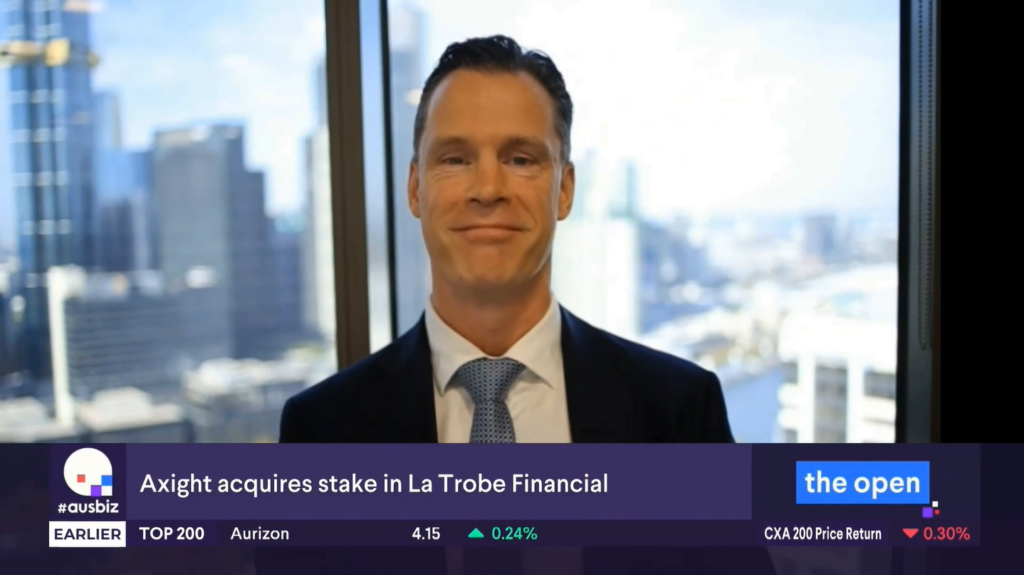
And on top of that, generative artificial intelligence, which no doubt will claim some jobs plus potentially some businesses, and you sense there’s perhaps less certainty now than for many decades. So a perfect person to chat to is Chris Andrews, chief executive of our sponsor La Trobe Financial, who joins me now.
Chris, always great to chat to you. The reason why you’re such an important person to talk to is you lend to many businesses. You lend to property owners, to developers as well. On the other side, you’ve got investors who are looking for to take advantage of higher interest rates. What’s your own sense about those uncertainties around right now?
So the sense for us, I think overall households are pretty strong. Generally their balance sheets sheets are in good shape. Small businesses. It’s a mix. You did mention the property sector, a lot of trades, a lot of builders, a lot of developers have been doing it tough for some years now. The cost increases that they’ve seen in materials and labor since Covid, they’ve taken a toll. So this period of uncertainty isn’t helpful for them, that’s for sure. But but in aggregate, across the Australian economy, we are reasonably well positioned heading into this this period of elevated uncertainty right now with these pressures.
Can I just ask when you look at, say, potential borrowers, be they businesses or be they property owners or developers, do you look at them on a sector wide basis and say, we won’t look at that sector? Or do you look at them on an individual borrower by borrower basis?
There’s always a great there’s always a great danger in taking these things sector by sector, Ross, and it’s just too broad a brush when you’re thinking about lending. So for us, it’s very much borrower by borrower getting the fundamentals right. And for those borrowers who’ve entered this period with their house in order, if you like, with their balance sheet in good condition, there’s no reason why they won’t continue to perform through this period, albeit potentially with their belt tightened.
So that’s the key, isn’t it? Because it doesn’t matter whether as you talk about households, if they’ve got cashflow, they’ve got jobs. If you’ve got businesses that have got contracts that they can manage their budgets in some way, shape or form and get through, it’s those that are overleveraged or who lose all their income for whatever reason. They’re the ones that are most exposed when when times become more volatile.
We do talk to our investors about this all the time, Ros. So you need always to be thinking about getting your balance sheet, getting your financial position in shape when times are calm. And if you’ve done that, then when you enter a period of accelerated volatility and those periods will always turn up. We’ve got an oil shock right now. We had a global pandemic five years ago. There will always be another cause of instability and volatility. But if you’ve got your fundamentals right, you are well positioned to weather those times and potentially profit from them. And if you think about Australia as a whole, we’re actually as well positioned as any country in the world to deal with this crisis. Yes, we’re at the end of a long supply chain. But, Ross, there are four great suppliers of energy to the world. There’s the US, there’s the Middle East, there’s the rush, there’s Russia, and then there’s Australia. We’re in a position where we could be part of the global solution if we’ve got the appetite to take it.
Yeah. And the other aspect of that is also that the people who come and put their deposits in with you, they’re going to be beneficiaries of higher interest rates during this cycle. But also they very much depend on you and you’ve been doing it for decades to be able to manage the other side of the balance sheet, those that you lend to, to make certain that there’s not the bad and doubtful debts, to make certain that those returns can be pretty much assured for them.
Ross, I can assure you, we practice what we preach every single day here at La Trobe Financial. We are preparing for the next financial crisis. We’re preparing for the next recession. You know, they always talk about this. Bad loans are written in good times. Will we prepare our portfolios to be really resilient and robust against the difficult times? And that’s what we preach to our investors and borrowers as well. Get your house in order when times are good so that when you’re in more complex times, you’re well positioned to weather the storm.
So that goes back to one of the original questions. It’s about your ability to know the businesses that you’re lending to, that you understand where the cash flow is coming from, you understand what security they’ve got against the the debts that they’re taking out, because that’s what good borrowing or good lending is during those tough times.
Yes. And Ross, what we’ve seen in Australia over many years is the robustness of fundamental consumer credit in Australia. Go back to that period between twenty two and twenty twenty four. The official cash rate increased by four and a quarter percentage points, and Australian households and small businesses continued to perform throughout. So it’s not the case that Australian households or businesses are overleveraged. There’ll be individual cases of hardship. Of course, there always are, but we have a fundamentally strong society. And as a nation, if we keep our head, if we don’t come up with sort of knee jerk reactions to what’s going on in the world, there’s no reason why we can’t come out of this current period of instability even stronger than we went in. But there are real choices and sometimes hard choices that will need to be made along the way.
Chris Andrews, chief executive of La Trobe Financial always good to chat to you, Chris.
Many thanks for your time today. Thank you Ross.